Lighthouses in the Canadian Coastal Context
Canada's coastline, which stretches across three oceans and includes thousands of islands, inlets, and navigational hazards, required an extensive network of lighthouse stations from the early colonial period onward. The construction and maintenance of lighthouses was a federal responsibility that came under Confederation in 1867, administered through the Department of Marine and Fisheries and, in later years, the Department of Transport and the Canadian Coast Guard.
By the twentieth century, Canada had built several hundred lighthouse stations along its coasts. Many were substantial structures — not simply towers, but complete stations that included keeper's dwellings, oil or fuel storage, outbuildings, and in some cases fog signal equipment. The light keepers who staffed these stations and their families often lived in relative isolation, and the stations became small self-contained communities at the margins of the inhabited coast.
The automation of lighthouse operations, which proceeded systematically from the 1960s through the 1990s, eliminated the need for resident light keepers. The Canadian Coast Guard completed the removal of the last of its staffed light stations in the late twentieth century, leaving the structures either vacant, maintained by remote monitoring equipment, or in some cases transferred to other parties. The buildings that had housed keepers and their families — often substantial wooden or masonry structures built to government specifications — became surplus federal property.
The Heritage Lighthouse Protection Act
The Heritage Lighthouse Protection Act (S.C. 2008, c. 16) was passed by the Parliament of Canada in 2008 and came into force on May 29, 2010. The legislation created a formal process for designating federally owned lighthouses as heritage properties, which would impose requirements on the Crown regarding the protection, maintenance, and alteration of designated structures.
The act established a petition system through which individuals and organizations could request that a federal lighthouse be reviewed for heritage designation. Petitions were to be submitted to Parks Canada, which was assigned administrative responsibility for the designation process. Parks Canada would assess petitioned lighthouses against established criteria relating to their historical associations, architectural character, and contextual significance, then recommend designation to the responsible federal minister.
A key provision of the legislation was a sunset period: petitions could only be submitted within a defined window following the act coming into force. After that period closed, lighthouses that had not been petitioned or designated could be disposed of — sold, demolished, or transferred — without the protections the act would otherwise provide. This created urgency for heritage organizations and community groups to identify and petition lighthouses before the window expired.
The Petition Process
Under the Heritage Lighthouse Protection Act, any person or organization could submit a petition to Parks Canada requesting that a federally owned lighthouse be reviewed for heritage designation. The petition had to identify the lighthouse and provide information supporting its heritage significance.
Parks Canada would then assess the lighthouse against criteria related to: its association with themes important in Canadian history; its association with persons significant to Canada; its representative or exceptional qualities as a design or construction type; and its aesthetic or visual qualities. Designated lighthouses could not be sold, transferred, or substantially altered without ministerial approval and specific protective conditions.
Parks Canada's Role
Parks Canada, which administers the Historic Sites and Monuments Act and maintains the federal Register of Historic Places, was assigned the role of receiving and assessing lighthouse petitions under the Heritage Lighthouse Protection Act. The agency's Historic Places Directorate developed assessment criteria consistent with the standards Parks Canada applies to other heritage designations.
The designation process under the lighthouse act is separate from the existing system under which the Historic Sites and Monuments Board of Canada recommends national historic site designations or commemorations. A lighthouse could, in principle, be protected under both regimes — designated under the Heritage Lighthouse Protection Act while also being recognized as a national historic site — but the two processes operated independently.
Parks Canada publishes information about the status of lighthouse petitions and designations on its website, and the federal directory of heritage lighthouse designations is accessible through the Historic Places of Canada database. The number of lighthouses that received heritage designation within the petition window represented a portion of the total stock of federally owned lighthouse structures.

Lighthouses in Atlantic Canada
Atlantic Canada — Nova Scotia, New Brunswick, Prince Edward Island, and Newfoundland and Labrador — contains a substantial concentration of Canada's historic lighthouse stations. The geography of the Atlantic coast, with its numerous headlands, islands, harbor entrances, and shoal areas, required close spacing of navigational aids to support the fishing and commercial shipping that moved through these waters from early in the colonial period.
Nova Scotia's lighthouse inventory includes structures representing several generations of federal construction standards. The Province of Nova Scotia's Department of Communities, Culture, Tourism and Heritage maintains documentation on provincially significant heritage properties, some of which include lighthouse structures or former keeper's dwellings. The Nova Scotia Heritage Property Program provides a framework for identifying and documenting built heritage, though federal lighthouse structures fall primarily under federal jurisdiction regardless of their significance to provincial heritage.
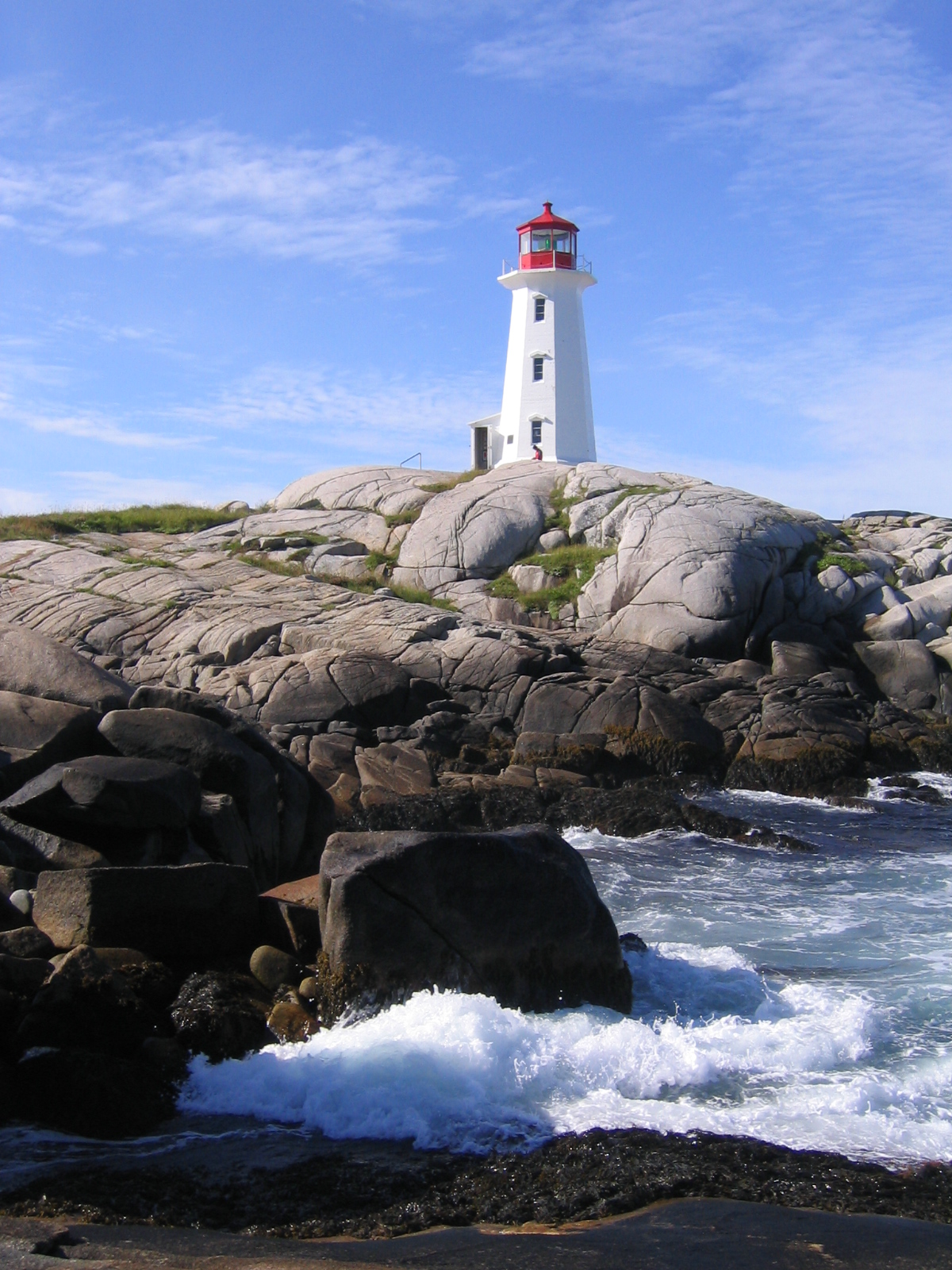
The Peggy's Point Lighthouse at Peggy's Cove, built in 1914, is among the most recognized lighthouse structures in Canada. Its octagonal concrete tower and adjacent keeper's dwelling, set on a granite headland at the entrance to St. Margarets Bay, have become one of the most frequently reproduced images in Canadian tourism and heritage photography. The lighthouse remains an active aid to navigation operated by the Canadian Coast Guard, while the site is managed as a tourist destination by the Province of Nova Scotia.
Challenges in Preservation
The preservation of lighthouse structures presents challenges that differ from those of other heritage building types. Many lighthouse towers are built of materials — cast iron, concrete, or timber framing — that are susceptible to the corrosive effects of salt air and marine exposure. The remote locations of many stations make regular maintenance difficult and expensive. The outbuildings and keeper's dwellings associated with lighthouse stations are often in more fragile condition than the towers themselves, having been built to lower construction standards and subjected to decades of neglect after automation removed resident staff.
Community groups that have taken on stewardship of lighthouse properties under the provisions of the Heritage Lighthouse Protection Act or through direct transfer from the federal government often face significant restoration costs. Federal transfer agreements have in some cases included conditions requiring the recipient to maintain the structure and keep it accessible to the public, but without ongoing operational funding, local organizations must raise the resources needed for preservation independently.
The New Brunswick Lighthouse Society, Nova Scotia Lighthouse Preservation Society, and equivalent organizations in Prince Edward Island and Newfoundland have worked to document, petition, and in some cases take on direct responsibility for lighthouse structures in their respective provinces. Their archives and advocacy work provide a detailed record of the preservation efforts that followed the Heritage Lighthouse Protection Act coming into force.
Active Navigation and Heritage Status
A number of lighthouse towers in Canada remain active aids to navigation operated by the Canadian Coast Guard, even where the associated buildings have been transferred or designated as heritage properties. The operational requirements of the Coast Guard — which primarily involve maintaining the light characteristic that mariners rely on — do not necessarily conflict with heritage designation, but they do mean that the towers remain under federal operational jurisdiction regardless of their cultural heritage status.
The combination of active navigational function and heritage significance creates a specific management context. Alterations to the tower structure that might affect the light or its visibility require approval from the Coast Guard's Aids to Navigation program. Heritage designation under the lighthouse act adds a second layer of approval requirements. Organizations with stewardship responsibility for lighthouse properties need to navigate both systems when planning maintenance or restoration work.
The Canadian Coast Guard's Aids to Navigation program publishes the List of Lights, Buoys and Fog Signals, which documents the characteristics of all active navigational aids in Canadian waters. This publication, updated annually, provides the technical specifications for each active lighthouse — including the light's character, height above water, and range of visibility — and is separate from any heritage documentation of the structure.
Documentation and Public Records
The documentary record of Canadian lighthouse construction and operation is distributed across several federal archives. Library and Archives Canada holds records from the former Department of Marine and Fisheries and subsequent transport-related departments that administered the lighthouse system. These records include construction drawings, correspondence, keeper's logs, and inspection reports that document the physical history of individual stations and the management practices of the federal lighthouse administration.
The Canadian Register of Historic Places, maintained by Parks Canada, provides publicly accessible documentation for nationally designated heritage properties including lighthouses that have received federal designation. Provincial heritage registers in Nova Scotia and other Atlantic provinces include additional lighthouse properties recognized at the provincial level. These registers are searchable online and include the statements of significance that describe the heritage values attributed to each designated property.
The condition assessments and feasibility studies prepared by Parks Canada and by provincial heritage offices in connection with lighthouse reviews under the Heritage Lighthouse Protection Act represent a significant body of technical documentation about the physical state of Canada's lighthouse stock at the time the legislation came into force. This documentation, while primarily produced for administrative purposes, serves as a reference point for understanding the preservation challenges each structure presented.
Sources: Parks Canada (Heritage Lighthouse Protection Act information), Canadian Heritage Information Network, Canadian Register of Historic Places, Library and Archives Canada, Canadian Coast Guard Aids to Navigation program.

